
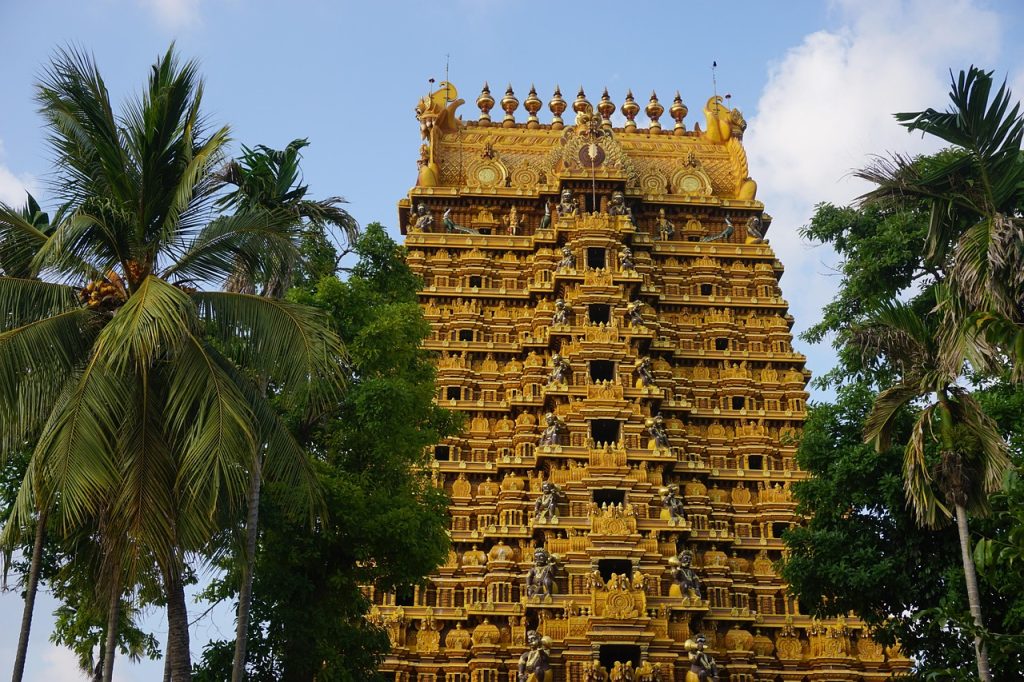
The Jaffna Kingdom, also known as the Kingdom of Aryachakravarti, was a significant Tamil kingdom in northern Sri Lanka that lasted from approximately 1215 to 1619 CE. Centered on the Jaffna Peninsula, this kingdom was established following the invasion by Kalinga Magha, a chieftain claiming origins from Kalinga in India. The Aryachakravarti dynasty, Tamil-speaking elites from South India, ruled this kingdom, which functioned as a tribute-paying feudatory under the influence of South Indian powers, including the Pandyan Empire.
During the 14th century, the Jaffna Kingdom was at its peak, exerting dominance over large parts of northern, northeastern, and western Sri Lanka. Although it briefly fell under the control of the rival Sinhalese Kingdom of Kotte around 1450, the kingdom regained its independence in 1467 under Kanakasooriya Cinkaiariyan. The rulers focused on economic prosperity by enhancing revenues from pearls, elephant exports, and land taxes. Unlike other contemporary kingdoms on the island, Jaffna was less feudal and developed important local Tamil literature, Hindu temples, and language academies.
Politically, the Jaffna Kingdom was a medieval settler polity heavily influenced by Tamil Nadu’s administrative, religious, and social systems. Despite its Tamil identity and leadership, it was never completely independent of the Sinhalese over-lordship, particularly during periods when Sinhalese kings sent military governors to the region.
Over time, Jaffna came under the influence or control of other South Indian empires, including the Vijayanagara Empire in the 14th to 16th centuries, which exacted tribute and asserted overlordship. The Portuguese conquered the Jaffna Kingdom in 1560, ending its sovereignty. The last king fled to South India but was defeated upon return, and the Portuguese consolidated control, incorporating Jaffna into their colonial empire.
The Jaffna Kingdom’s significance lies in its role as a center of Tamil culture, language, and Hindu religion in Sri Lanka, as well as its strategic economic importance due to its access to maritime trade routes and valuable resources like pearls and elephants. It also illustrates the complex interplay of local Tamil, Sinhalese, and South Indian powers on the island from the medieval period until the arrival of European colonizers.

